Retail and Industrial Commercial Property Appraisal Trends in Elgin County
Elgin County sits at an interesting crossroads. It has the bones of a traditional agricultural and manufacturing region, yet its industrial future is being redrawn by large-scale investment and a deepening logistics network tied to Highways 401 and 402. Retail is pulling in two directions at once: sleepy main streets that thrive on local loyalty and seasonal tourism, and highway-oriented plazas that rise and fall with commuter traffic and brand tenancy. For a commercial appraiser in Elgin County, those counterweights define the job. Values are no longer purely about square footage and age. They turn on tenant covenants, power capacity, loading, parking geometry, and the storytelling within leases.
What follows is a field-level view of where retail and industrial commercial property appraisal in Elgin County is heading, and how owners, lenders, and municipalities can make better decisions with current data rather than rules of thumb from five years ago.
What is moving the market
Two forces dominate most appraisal conversations right now. First, the announced Volkswagen Group battery plant for St. Thomas, paired with supplier interest across the county, has pulled industrial demand forward. Even before shovels hit the ground, owners of older warehouses started getting unsolicited calls from fabricators and logistics firms that want a foothold. Second, the interest rate swing that began in 2022 pushed cap rates up across Canada, especially in secondary markets. That reset is still working through asking prices and lender stress tests.
On the ground, the picture is mixed. Well-located industrial with clean environmental history and decent clear heights is scarce and trades quickly. Obsolete industrial with low power, tight truck courts, or chronic water ingress is still a heavy lift. In retail, grocery-anchored plazas with strong shadow anchors hold value, while secondary strips with nail-salon-heavy rosters need sharper pricing and more generous tenant improvement packages to backfill.
Industrial pulse: rents, vacancy, and buyer profiles
Industrial vacancy across Southwestern Ontario has hovered at historically low levels in recent years. In Elgin County, truly modern space is limited, which keeps upward pressure on net rents for anything that checks the basics. For functional product with 22 to 28 foot clear height, dock-level loading, and at least 600 to 1,200 amps of power, recent net rents have often fallen in the 9 to 12 dollars per square foot range, with newer build-to-suit commitments sometimes reaching higher for specialized use. Older stock with 14 to 18 foot clear, one or two drive-in doors, and dated office finishes frequently leases in the 6 to 8 dollar range, provided the location works for trucking and the landlord is willing to invest in deferred maintenance.
Buyer profiles have widened. Local owner-occupiers still dominate the sub-50,000 square foot bracket, but private funds and family offices out of the GTA or London now tour the county when comparable yield in primary markets looks thin. For a commercial real estate appraisal in Elgin County, that change in bidder mix matters. Institutional capital usually brings stricter environmental and building system thresholds, and they price risk with a finer comb. A Phase I ESA with a few historical flags, overhead gas heaters dating from the early 2000s, or a marginal turning radius for 53 foot trailers can shift the cap rate by 25 to 50 basis points in underwriting.
Retail landscape: small towns, lakeside tourism, and highway frontage
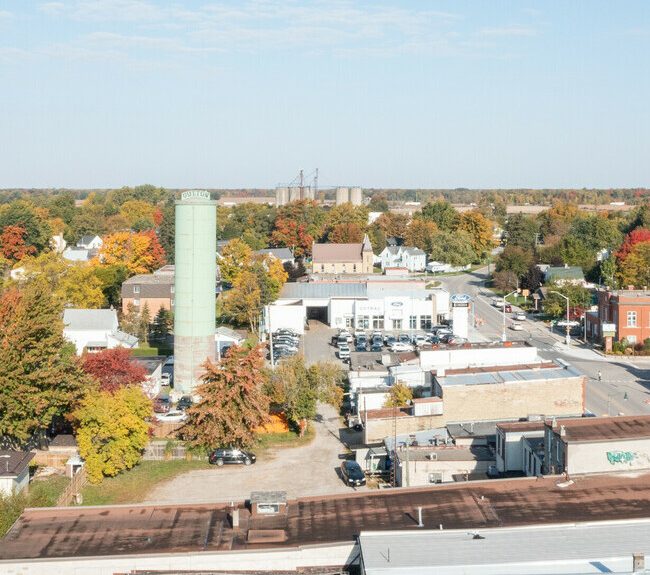
Retail in Elgin County is not one market. Downtown St. Thomas is different from Port Stanley’s summer trade, and both differ from a highway pad site at a 401 interchange. On main streets, gross rents for small bays can land between 18 and 30 dollars per square foot depending on frontage, ceiling height, and condition. Many of these leases are semi-gross or modified gross rather than fully net, so appraisers spend time normalizing expense structures before applying capitalization.
Neighbourhood plazas with service tenants and easy parking have held net rents in the mid-teens to low twenties. Newer highway-oriented units that land a quick-serve food tenant with a drive-thru window can push higher on a net basis, but construction and fit-out costs have escalated, which drags on deal flow. Vacancy risk is most evident in mid-block strips with homogeneous tenant mixes. When two or three personal services leave at once, the re-leasing clock can stretch, especially if façade upgrades or parking lot work are overdue.
For seasonal nodes like Port Stanley, the appraisal hinges on how the lease handles percentage rent, seasonality, and landlord costs during the off months. Stabilized net operating income is not the simple average of a hot July and a quiet February. A credible commercial appraisal services firm in Elgin County needs to model seasonality explicitly, then reconcile that with market-derived cap rates that often reflect year-round risk.
Comparing the three approaches to value
Most commercial property appraisal in Elgin County still relies on the direct comparison and income approaches, with the cost approach as a guardrail for special-use or newer construction.
Direct comparison works when there are enough recent sales with similar characteristics. That is a challenge here. Data often has to be widened to include London, Woodstock, and Oxford County, then adjusted for location, building age, and size. Industrial premiums for power and loading vary by buyer profile, so extracted adjustments need context rather than a rote percentage.
The income approach is indispensable for investment-grade assets. It demands careful normalization of rents, vacancy, and expenses. For industrial, net leases with base year expense stops or caps on management reimbursements can trip up a simple pro forma. For retail, the trickiest part is often recovering common area maintenance in older strips with inconsistent leases. Appraisers who treat management fees as a fixed percentage without defending that figure against actual leasing behavior risk over- or understating net operating income by material amounts.
The cost approach earns its keep for special-purpose buildings or where the improvements are new enough that depreciation can be credibly quantified. Steel prices, roofing membranes, dock equipment, and sprinkler installs have all seen cost swings in the past few years. When we prepare a cost analysis on a 40,000 square foot light industrial building with ESFR sprinklers, insulated metal panels, and a 3,000 square foot mezzanine office, hard costs can pencil between 170 and 220 dollars per square foot, depending on specification and contractor pipeline. Soft https://www.instagram.com/realexappraisal/ costs and developer profit bring the all-in figure higher. Land value still hinges on recent comparable sales and servicing status, and here again, a thin dataset creates wider confidence intervals.
Cap rates and yield expectations by asset type
Cap rates moved up with borrowing costs through 2023, then started to stabilize as rate expectations cooled. In Elgin County, industrial cap rates for functional, leased product have commonly fallen in the 5.75 to 7.25 percent range in the past year, with the lower end reserved for strong covenants, modern specs, and clean environmental histories. Older buildings with limited utility, short lease terms, or known capital projects can trade north of 7.5 percent.
Retail is more dispersed. Grocery-anchored centers with solid tenant rosters have seen cap rates in the 6 to 7.25 percent range, again influenced by covenant quality and lease term. Unanchored strips often bracket 7 to 8.5 percent, widening for weaker tenant mixes or high rollover concentration in the first three years. Single-tenant net-leased pads in the best nodes sometimes compress below 6.5 percent if the lease is long and the brand is investment grade. All of these are directional ranges, and individual assets will break the pattern when a story element shifts the risk profile.
For a commercial property assessment in Elgin County prepared for financing, lenders often ask for a sensitivity that tests cap rates plus or minus 50 to 100 basis points. That exercise is not boilerplate. It highlights whether a property’s value is stable enough to carry current leverage if rates settle higher for longer.
Thin markets and the art of comp selection
Local sales data can be sparse. When there are only a handful of industrial trades in a year, each with unique baggage, the risk of making a poor adjustment grows. Appraisers who work here regularly tend to maintain private files of verified deals and deep notes on the conditions of sale. That includes whether a buyer was an adjacent owner paying a site control premium, whether a property languished due to a known roof issue, or whether a sale closed quickly as part of an estate settlement.
When we cross-pollinate with data from London or Woodstock, we adjust for travel time to the 401, labour pool catchment, and local tax regimes. A 10 to 20 minute haul to the 401 can be a meaningful operational cost for some users. That spreads into rent and, through the income approach, into value. Similarly, industrial parks with wide turning radii and multiple access points will outpull landlocked sites even if the buildings match on paper.
The lease is the valuation engine
For retail and industrial, the lease is where value happens. Two 20,000 square foot industrial buildings can look similar but value very differently if one has a triple-net lease with annual indexed bumps and the other has a flat net rate with landlord-responsible parking lot repairs. For retail, co-tenancy clauses and termination rights can ripple across a plaza when a named anchor downsizes. Appraisers in Elgin County who treat the rent roll as a static sheet miss what drives investor behavior.
Percentage rent rarely carries the day in small-town retail, but it appears in seasonal nodes. Expense recoveries can be capped, fixed, or variable. A landlord who promises a low base rent with a large landlord work letter might be signing up for returns that look fine on a pro forma and thin in reality. We focus on the cash timing and certainty. Are there deposits? How is free rent structured? Does the tenant have options to terminate tied to specific sales or occupancy milestones? Those details move cap rates.
Environmental, servicing, and zoning
Industrial properties built before the 1990s often come with investigative history. Even a clean Phase I ESA that references past metal work or a former bulk storage tank can make a cautious buyer slow down. Phase II recommendations, if executed, matter; the presence of a record of site condition can shorten the lender’s review time. That schedule risk is another way environmental history seeps into value, even when current contamination is not present.
Servicing and zoning are more than checkboxes. M1 or M2 zoning that accommodates outdoor storage can be a value driver if the site has a workable yard. Conversely, an ideal building on a site with no room to stage trailers will find a narrower buyer pool. In retail, parking ratios dictate tenant quality, and stormwater capacity can govern whether a restaurant with a patio is even feasible.
Construction costs and depreciation in practice
Replacement costs are still volatile. Steel prices have cooled from the peaks but remain above pre-2020 norms. Dock equipment, racking, and electrical switchgear lead times can stretch pro formas and increase soft costs. On the depreciation side, industrial roofs in this climate often require full replacement around the 20 to 25 year mark unless the owner has pursued a disciplined maintenance program. Appraisers factor in not just age, but actual performance. We walk roofs, we talk to operating managers, and we request invoices that tell a truer story than a neat capital reserve line item.
Functional obsolescence shows up in odd places. A beautifully kept 1980s plant with 12 foot clear and mezzanines carved into every corner might perform well for a single user but translate poorly to investor math. If a typical tenant profile in the area now expects 22 foot clear and five docks for 50,000 square feet, the older plant’s market rent will float down to reflect that mismatch. The same pattern appears in retail with narrow bay widths or floors that step up and down. Those physical realities influence turnover and downtime.
MPAC assessments and private appraisals
Many owners still lean on their MPAC assessment as a rough proxy for value. In some cases that gets you within a ballpark, but it is not a valuation standard that lenders rely on. MPAC’s purpose is property assessment for taxation, not underwriting or disposition. For commercial real estate appraisal in Elgin County, private appraisals apply CUSPAP standards, reconcile multiple approaches, and incorporate current lease-level analysis. If you are weighing an appeal of your assessment, an appraisal prepared for tax purposes can help frame the argument, but do not treat it as interchangeable with a financing or acquisition report. The scope and assumptions differ.
Lender expectations and scope decisions
Financing appraisals have tightened. Local lenders still understand the market’s quirks, yet they too have layered on covenant tests and interest coverage stress. Expect to support your rent assumptions with evidence, not just nearby asking signs. For construction, lenders want to see a credible cost breakdown, contingencies, and a realistic lease-up timeline. If your project leans on a single large tenant, the bank will look closely at the covenant, the lease form, and the rent relative to market.
For larger properties, narrative reports with full market analysis are standard. Restricted-use letters can work for internal decision making but rarely satisfy third-party needs. If your goal is a sale decision, an as-is and as-stabilized value set can be useful, especially for retail needing capital improvements before lease-up.
A short preparation checklist for owners ordering an appraisal
- Current rent roll with start dates, expiries, options, and any percentage rent or co-tenancy language
- Last two years of operating statements, including detail on recoverable and non-recoverable expenses
- Copies of major leases and any recent amendments or estoppels
- Evidence of recent capital projects, with invoices and warranties where available
- Any environmental reports, building condition assessments, or site plans that relate to expansion or servicing
Handing over a clean package shortens turnaround and reduces the chance of conservative default assumptions. That is especially true for assets with irregular expense recoveries or pending lease deals. A commercial appraiser in Elgin County can move faster and price risk more precisely when the story is fully documented.
Edge cases we see in the county
Special-use industrial buildings often sit outside neat comparison buckets. A food processing plant with ammonia refrigeration, trench drains, and washable finishes does not lease like a general warehouse. A cannabis grow facility with specialized HVAC and security rarely converts easily. Crane-served bays command a premium from a narrow subset of users and may be a drawback for others if the crane impedes clear height or floor layout. In all these cases, the income approach, backed by direct conversations with active tenants or buyers in the specific niche, has more weight. The cost approach provides a cap on how far above replacement a sale can go unless strategic location or timing forces a premium.
In retail, waterfront locations bring tourists and foot traffic, but parking capacity, noise bylaws, and seasonality hold equal sway. A plaza that rings cash registers in July can still underperform over a 12 month year if leases are too generous on fixed landlord costs during the off season. We model these assets with stabilized assumptions that recognize peak and trough rather than forcing a flat average.
Construction pipeline and land values
Industrial land that is truly ready for a shovel remains scarce. Parcels with good frontage and quick access to 401 or 402 attract attention, but servicing status is the gatekeeper. In the past two years, fully serviced industrial lots within 10 to 15 minutes of the 401 have traded at material premiums to raw land that still requires significant off-site works. Developers factor in not just hard servicing, but also development charges, environmental permitting, and timing. An extra 12 months in approvals can erode project IRRs enough to change what they can pay for land.
Retail land follows a similar rule set with one extra twist. Drive-thru capable pads with controlled turns and stacking capacity command strong pricing where traffic counts and sightlines support fast food or coffee users. Without those traffic and geometry elements, pads often revert to bank or medical interest at lower rents. A commercial property appraisal in Elgin County that values a pad site without modeling access and stacking is missing the primary driver.
Practical pricing and negotiation observations
Negotiations in the county still carry a local flavor. Buyers and sellers often know each other or have one degree of separation. That can help or hinder a deal. We see vendors hold to aspirational prices based on a single splashy sale in a neighboring city without adjusting for building utility or lease maturity. On the buy side, some groups try to import GTA-level rent growth assumptions that outstrip what local tenants can shoulder. An appraisal grounded in local absorption, realistic TI budgets, and current downtime is a good antidote.
When a property is going to market, small pre-listing fixes pay off. Re-striping a lot, repairing obvious roof leaks, or commissioning a fresh Phase I can improve both the pool of bidders and the cap rate they bring to the table. Appraisers will not raise value for a cosmetic coat of paint, but investors do react to signs of neglect that hint at hidden costs.
Choosing the right advisor
Not every assignment needs a door-to-door building inspection, but many benefit from it. For larger or more complex assets, insist that your appraiser walks the roof, inspects mechanical rooms, and photographs loading docks and truck courts. Ask how they source and verify comparables in a county where transactions are sparse. If you are commissioning commercial appraisal services in Elgin County, find out whether the firm has recent files for similar assets, and whether they can explain their adjustments in plain language. A credible report shows its work, not just its answer.
Near-term outlook
Over the next 12 to 24 months, industrial demand should remain firm, especially for buildings that can support light manufacturing or supplier logistics tied to the battery plant ecosystem. Expect net rents to stabilize with modest growth where functionality is strong. Cap rates may compress slightly if bond yields drift down and lenders ease proceeds, but underwriting will still separate utility from obsolescence.
Retail will continue to bifurcate. Nodes with strong anchors, medical users, and service tenancy will hold. Seasonally driven locations will perform, with volatility that needs to be modeled with care. Strips that rely on low-margin personal services without diversification should underwrite to higher vacancy and downtime.
Construction costs will remain elevated relative to pre-2020, keeping replacement values a real consideration. That backdrop helps existing assets, provided they do not require large near-term capex. Environmental diligence will stay central, with lenders preferring clean files and predictable timelines.
Across all of this, the common thread is documentation and realism. If you own or are acquiring commercial property in the county, keep your lease files tight, your operating statements detailed, and your capital plans honest. A well-supported commercial property appraisal in Elgin County is not just a report for a lender. It is a decision tool that, when built on good inputs and local knowledge, saves time, protects returns, and helps you navigate a market that is changing faster than most of us expected.