Navigating Expropriation: Commercial Land Appraisers’ Role in Perth County
Expropriation sounds abstract until the survey stakes show up at the edge of your parking lot or an engineer’s drawing trims ten metres off your frontage. In Perth County, where many income properties sit on arterial corridors and village main streets, even a modest taking can ripple through rent rolls, site plans, and financing covenants. The right commercial land appraiser helps cut through the uncertainty. They translate planning drawings and right‑of‑way schedules into numbers that withstand scrutiny under Ontario’s Expropriations Act, and they do it with a clear view of how local markets actually behave.
I have sat at kitchen tables in St. Marys with owners worried about losing truck access to a shop, and in boardrooms in Stratford with lenders asking whether a car wash still covers debt service after a partial taking. The facts, parcel by parcel, are different. The framework is not. Owners are entitled to be made whole. Getting there requires disciplined valuation combined with local judgement about highest and best use, tenant risk, and how buyers in Perth County actually price real estate.
The legal frame that shapes the valuation
Ontario’s Expropriations Act, R.S.O. 1990, sets the heads of compensation. In plain language, a commercial owner affected by a taking may be entitled to:
- Market value of the land or interest taken.
- Damages attributable to disturbance, which for businesses can include reasonable relocation costs and certain losses tied to the move.
- Injurious affection, which covers the loss in value to the remainder when only part of the property is taken, plus certain losses tied to construction or the project’s operation.
- Special difficulties in relocation in limited cases.
Those categories look simple on paper. In practice, the appraiser’s report is the backbone for the first and third items, and it often informs the second. Injurious affection is where most disagreement lives. Two identical strips of frontage taken from two outwardly similar sites do not create the same loss. Access geometry, building placement, parking count, signage, utilities, drainage, and zoning compliance all matter. The Act compensates for loss in property value caused by the taking and the works, not for fear or annoyance. The math has to connect back to market evidence.
Perth County matters here. Buyers and tenants in North Perth, Perth East, Perth South, and West Perth do not pay the same rents or apply the same cap rates as those in central Toronto. Many commercial parcels are owner‑occupied, so the income approach needs careful normalization. Some townships still permit on‑site septic and well for smaller commercial uses, which raises different constraints than a fully serviced site in Stratford. Commercial building appraisers in Perth County learn to adjust national methodologies for small‑market realities, otherwise the compensation figures drift away from what a real buyer would do.
What an expropriation appraisal actually answers
A standard commercial property assessment for financing or purchase compares similar sales, builds an income capitalization, and sometimes uses a cost approach. An expropriation assignment extends that toolkit.
First, the appraiser determines highest and best use before and after the taking. This is not boilerplate. On a corridor subject to longstanding intensification plans, the market may already price in redevelopment potential. Losing depth or access can shut that door, which affects today’s value even if the site will not redevelop for years. On the other hand, a marginal change that still preserves site plan conformity and traffic flow may have little measurable effect beyond the square metres taken.
Second, the appraiser quantifies market value for the interest actually taken. A fee simple strip along the front is different from a permanent easement for a buried utility, which in turn is different from a three‑year temporary grading easement. Each interest carries a different bundle of rights. Getting this wrong can swing compensation by an order of magnitude.
Third, the appraiser tackles injurious affection. That might mean reconciling three linked questions: how much did the remainder drop in value because of lost access or exposure, what repairs or reconfigurations are necessary to restore function, and how would a prudent buyer price that mix of impairment and cure cost. The Expropriations Act aims at value loss, not at writing a blank cheque for upgrades. Lenders and tribunals expect a clear bridge from impairment to market reaction.
Fourth, the appraiser helps structure negotiation. The numbers do not live in isolation. Proposed construction schedules, temporary closures, haul routes, and staging areas matter. Appraisers translate these time‑bound disruptions into duration‑specific losses where the Act allows, and they help separate compensable impacts from general construction inconvenience.
How Perth County’s commercial fabric affects valuation
Most commercial inventory in Perth County clusters along provincial and county roads that thread through town cores and rural hamlets. Think automotive service bays on a county road, a veterinary clinic on the edge of Mitchell, a flex industrial building near Listowel, or a strip plaza with three tenants in Milverton. These properties rely on convenient access, on‑site parking, and signage visibility. Frontage is not just about curb appeal. It often defines turning movements for delivery trucks, the number of legal entrances, and how snow storage functions in winter.
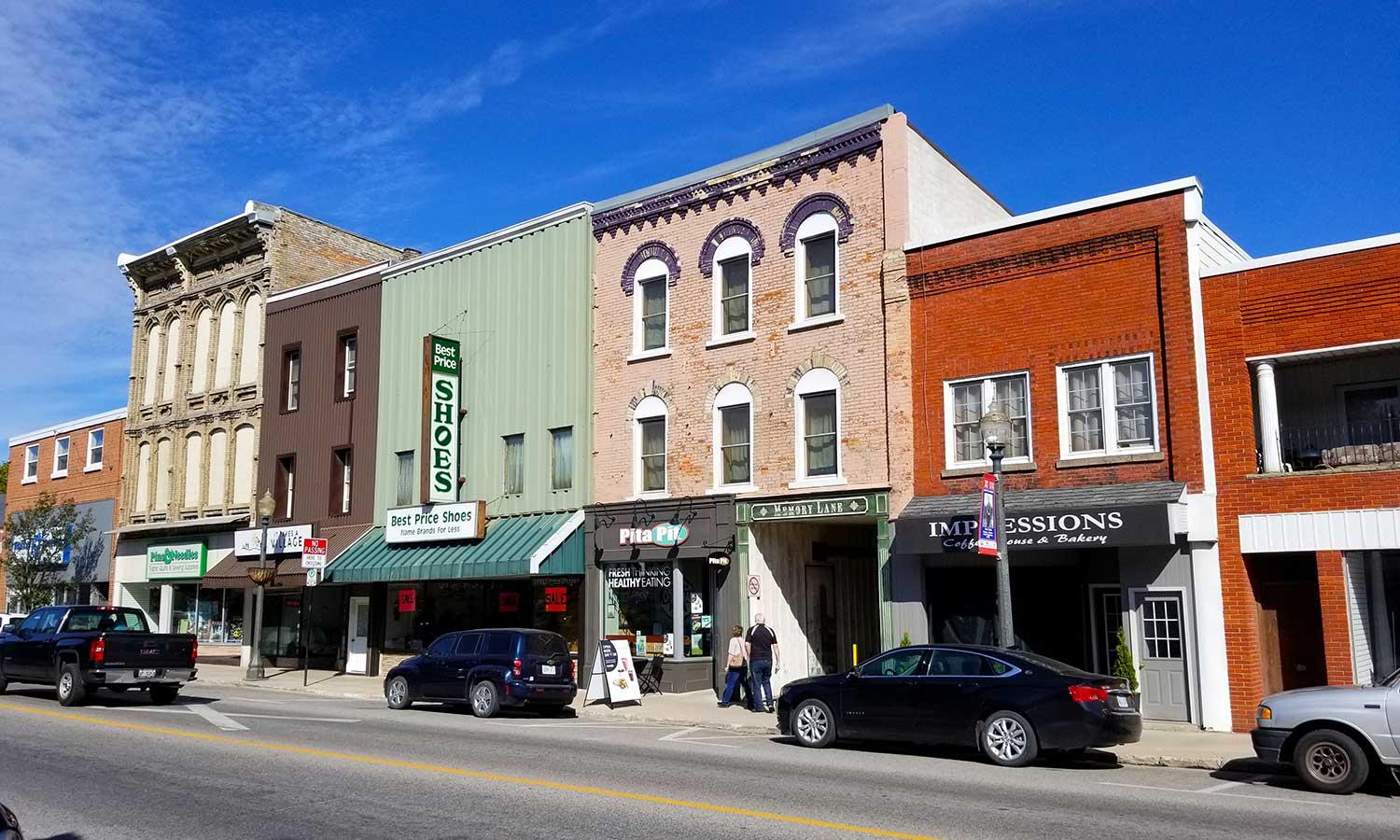
Here are recurring site‑specific factors that change the math:
-
Access and turning radii. If a taking removes a slip lane or narrows the throat of a driveway, larger vehicles may no longer enter safely. Buyers discount sites that require backing onto public roads or creative maneuvers. The magnitude of the discount depends on traffic speed, sightlines, and whether an alternative entrance exists.
-
Parking counts and layout. Many commercial sites are non‑conforming by today’s zoning standards yet function fine. A frontage taking that deletes four stalls can push the site below its legal minimum. If there is no room to restripe and recover stalls, the appraiser has to consider whether certain tenant types become ineligible under site plan rules, which would alter the rent profile and cap rate.
-
Exposure and signage. Buyers pay a premium for locations where customers can see the building from a distance and read a freestanding pylon. A lower speed limit introduced with a road reconstruction sometimes offsets reduced exposure. In other cases, raised boulevards or larger setbacks force relocation of signage to less effective positions.
-
Servicing and drainage. In rural parts of Perth County, stormwater outlets, culverts, and ditch grades are not trivial. If a taking disrupts drainage and the cure involves retaining walls, regrading, or engineered solutions, the appraiser has to weigh the cure cost against the market reaction to an unimproved impairment. Not every cure dollar produces a dollar of value.
-
Zoning conformity and future optionality. Buyers pay for choices. A deep lot with potential for building expansion or second access carries option value. Trimming depth may not hurt today’s rent, but it removes redevelopment paths that used to be on the table. Capturing that lost optionality requires careful highest and best use analysis, supported by local planning context and any trajectory evident in recent sales.
These are not academic points. On a Mitchell corridor project a few years back, a partial taking for a left‑turn lane clipped the corner of a small shop’s parking area. The initial offer assumed minimal impact beyond the strip value. A site plan review showed the accessible stall would be out of compliance and the truck route would conflict with customer parking. We priced a cure that created a new delivery path at the rear, and we adjusted the cap rate for a slightly weaker tenant mix given the new layout. The injurious affection award reflected both, not just the square metres taken.
Valuation approaches tailored to expropriation
Sales comparison still anchors market value for many commercial properties in Perth County. The challenge is finding truly comparable parcels, then making defensible adjustments. On owner‑occupied buildings, the income approach will be relevant only if stabilized market rent and vacancy can be supported by local leases rather than generic provincial averages. On investment strips and plazas, the income approach often carries more weight, but it must reflect the micro‑market.
-
Sales comparison. Sales are screened for location, size, building quality, exposure, access, and time. In rural and small‑town exchanges, arm’s‑length verification is critical because some recorded prices include business value or vendor take‑backs. Time adjustments in stable Perth County submarkets are modest, but notable shifts appear when a new national tenant anchors a nearby node or when competitive new stock opens.
-
Income capitalization. For small retail and service commercial in the county, market rents often sit in a band that reflects tenant type and age of improvements. A local service tenant might pay in the low to mid tens per square foot net, while national credit can reach the high teens in preferred nodes. Cap rates tend to sit higher than larger urban centers, commonly in the mid 6 percent to low 9 percent range depending on covenant, term left on leases, and asset quality. A partial taking that pushes the property from “easy to lease” to “quirky layout” might add 25 to 75 basis points to the risk premium. That small rate change has an outsized impact on value.
-
Cost approach. Less common for income assets, but useful when specialized buildings trade infrequently, such as cold storage or certain automotive uses. Replacement cost new less depreciation can support a floor value for the improvements when sales evidence is thin, but the land component and functional obsolescence must be thought through.
When injurious affection is at issue, before‑and‑after valuation becomes the practical technique. Value the whole property as it was. Then value it as it will be, after the taking and after any reasonable cure. The difference, less the market value of the strip acquired if it is included in the before‑and‑after arithmetic, reflects the remainder damage. A rigorous report will also test alternative cures and explain why a particular set of works is considered reasonable.
Temporary easements call for a separate line of analysis. Compensation often reflects the rental value of the occupied area plus reasonable disturbance where applicable, scaled for duration and intensity, and it should consider whether the easement blocks circulation or staging in a way that disrupts business beyond the footprint itself.
The roles around the table
Expropriation work is rarely a solo sport. While commercial land appraisers in Perth County carry the valuation file, they coordinate with:
-
Land use planners to confirm zoning, site plan requirements, and whether the taking creates or cures a legal non‑conformity. Without this, highest and best use can rest on shaky ground.
-
Civil and traffic engineers to understand access geometry, queuing, and turning templates. An engineer’s template showing that a typical delivery truck cannot make the turn is more persuasive than a textual claim that “access is impaired.”
-
Accountants or business valuators when a claim seeks compensation for business losses. The appraiser’s scope is property value, not enterprise value, but the two intersect around tenant retention and re‑tenanting risk.
-
Legal counsel to ensure the theory of compensation aligns with the Act. The Ontario Land Tribunal process, including the Board of Negotiation as a facilitative path, has its cadence. Reports need to fit that rhythm.
On public projects in the county, you will encounter a mix of expropriating authorities. Municipalities acquire for road widenings, sidewalks, and drainage works. Utility companies seek linear corridors for pipes and fiber. Provincial agencies may widen or realign highways. The differences matter less than you might expect. The compensation framework is the same, and the discipline in the file is what persuades, regardless of who sits on the other side.
Timing and process, in real weeks not abstractions
From the owner’s first notice to a signed agreement, a year passes quickly. A practical timeline I have seen, with some variation:
-
Pre‑notice conversations and survey access. Some authorities engage owners early. This is a good moment to retain a commercial appraisal company with expropriation experience and to document current operations, traffic counts if available, and any near‑term plans for expansion.
-
Formal notice of application to expropriate and registration. Title searches, plan references, and draft descriptions circulate. The appraiser begins the before valuation and starts assembling comparable sales and leases while engineers finalize drawings.
-
Offer of compensation for market value and disturbance. Owners often receive an initial market value offer based on internal or third‑party appraisals. Many accept payment without prejudice, preserving the right to claim more. Your appraiser should review assumptions and site impacts before you respond.
-
Construction staging and temporary easements. If a temporary easement is necessary, the duration and permitted uses within that area need to be clear. Compensation for temporary rights is negotiated or determined separately.
-
Negotiation, mediation, and if necessary, hearing. The Board of Negotiation offers a non‑binding route to narrow gaps. If parties cannot agree, the Ontario Land Tribunal can determine compensation. Well‑structured appraisal reports often lead to settlement without the cost of a hearing.
Throughout, commercial building appraisers in Perth County keep two calendars. One tracks statutory steps. The other tracks business reality, like renewal dates in tenant leases, seasonal cash flow, and lender reporting. Synchronizing the two avoids surprises. If your automotive tenant has a spring tire rush, a driveway closure in April hurts more than in February. The valuation can reflect that if the evidence supports it.
How partial takings shift site value
A few scenarios illustrate the nuance:
-
A small front strip taken from a single‑tenant retail pad in Stratford reduces setback but still leaves eight angled stalls, legal access, and room for a relocated sign. Buyers in that node are yield‑driven and the tenant has strong covenant. We found negligible change to the cap rate, the square‑metre value of the strip itself captured most of the compensation.
-
A 12 metre slice along a county road takes out the only truck entrance to a contractor’s yard. The remainder can build a rear entrance over a culvert at a cost, but turning radii inside the yard are now tight and winter snow storage options shrink. The market reaction is not just the cost of the culvert. Some user‑buyers walk away. Those who remain demand a price that reflects daily inconvenience and occasional operational compromises. The after value drops by more than the cure cost.
-
A strip plaza in a village core loses four stalls and a left‑in turn due to a raised median. Leases come up over two years. Local service tenants can live with the change, but food uses that rely on convenience pick‑ups balk. The rent roll softens, and a small increase in the cap rate applies. Before‑and‑after income models grounded in recent county leases capture the damage better than a pure sales comparison.
These outcomes are not preordained. Sometimes an authority adjusts a curb cut, funds a better cure, or tweaks staging to preserve access during peak seasons. Appraisers who bring options to the table early, with sketches and priced cures, often save months of quarrel.
The difference between land and building appraisal in this context
Owners often ask whether they need a commercial building appraisal or a commercial land appraisal. In expropriation you usually need both perspectives. When a taking consumes vacant land or undeveloped frontage, the land component dominates. When the taking or its effects impair https://landenljez701.fotosdefrases.com/top-commercial-appraisal-companies-in-perth-county-what-to-look-for the use of the building, such as altering code compliance, circulation, or visibility, building utility becomes central. Appraisers will parse land value from improvement value even within an income approach, because cap rates implicitly reflect building quality. For older improvements with limited contributory value, much of the property’s worth sits in the land and its permissions. That does not make the building irrelevant. If the taking turns a legally conforming building into one that encroaches into a new setback or loses fire route widths, function and risk change materially.
Commercial building appraisal in Perth County often accounts for construction that blends office, light industrial, and service bays on the same site. Those hybrid facilities behave differently in the market than a pure retail pad. The expropriation analysis must respect that mix. A removed lane that makes truck queuing awkward will spook tenants even if customer parking survives.
Preparing as an owner: what to document and why it matters
Owners who assemble strong files early make better decisions and avoid compensation gaps. A short, pragmatic checklist helps.
-
Current site plan, surveys, and any minor variances or zoning decisions that govern the layout. If your parking count is legal only because of a variance, that must be on the table when a taking threatens stalls.
-
Lease abstracts and rent rolls with option terms, exclusives, and renewal dates. Compensation models that reflect real lease risk are more persuasive than generic pro formas.
-
Operating statements and maintenance logs that show typical costs, snow removal patterns, and any chronic drainage or access issues that will interact with construction.
-
Traffic and access notes, even informal counts during peak periods. Photographs of queueing and turning movements help engineers and appraisers model impacts credibly.
-
Correspondence with lenders about covenants tied to occupancy, debt service coverage, or collateral descriptions. A partial taking can trigger compliance questions that influence owner choices.
None of this is busywork. It arms your commercial land appraiser with facts that shape highest and best use and the before‑and‑after valuation. It also shortens negotiations because both sides see the same constraints.
Choosing the right appraisal partner
Experience in expropriation work is as important as general commercial valuation skill. Report structure, evidence standards, and tribunal expectations differ from a standard mortgage appraisal. When considering commercial appraisal companies in Perth County, ask how many expropriation files they have taken through negotiation and, if necessary, to a hearing. Local knowledge matters. A practitioner who has valued similar sites on the same corridor will not have to guess at cap rates or rent spreads.
You may hear two labels in the market: commercial land appraisers and commercial building appraisers. In smaller markets, the same professionals often fill both roles. The real question is whether they can demonstrate before‑and‑after analysis, injurious affection reasoning, and comfort with easement valuations. Review sample redacted reports if you can. Look for clear highest and best use sections, a defensible set of comparables, and candid discussion of uncertainty where evidence is thin.
Comparing takings, easements, and temporary rights
Not all acquisitions are equal. A short comparison helps set expectations.
-
Fee simple taking. Full title to the strip or parcel transfers. Compensation reflects market value of the land taken plus any injurious affection to the remainder. The value per square metre for a narrow frontage slice is not always the same as the implied land value of the whole site. Depth, utility, and plottage influence price.

-
Permanent easement. The authority acquires a right to use a defined area for a specific purpose, such as a buried utility. You retain title but lose some rights. Compensation typically reflects the diminution in value caused by the easement’s burden and any restrictions on building or access, not a full fee value.
-
Temporary easement or licence. Time‑limited rights for construction staging or access. Compensation often mirrors a market rent for the period, adjusted for intensity of use and specific interference, plus reasonable disturbance where eligible.
Understanding which interest is at play avoids crossed wires. I have seen owners assume a buried pipe easement deserves fee value, and authorities assume a fee strip should be priced like a utility corridor. Neither helps reach a fair agreement.

How Perth County comparables guide, but do not handcuff, the number
The best expropriation reports in the county mix nearby evidence with judgment. Recent sales on the same road carry weight, yet you must unpack what traded. If a sale price includes a thriving car‑wash business alongside the real estate, stripping out the enterprise value is essential. Cap rate evidence from Stratford’s busier nodes cannot be applied wholesale to a secondary street in a smaller township. Vacancy risk looks different in St. Marys than in Listowel when a key tenant leaves.
On the other hand, do not let “unique property” become a crutch. Even specialized buildings sell, and their transactions help set bounds. When comparable sales are scarce, broaden the search in geography or time, then justify measured adjustments. Local brokers, municipal staff, and public records provide colour that does not show up on a data sheet. Commercial property assessment numbers can help triangulate, but they are not a substitute for market analysis. Assessment reflects tax policy and mass appraisal, not negotiated price.
Working with the process rather than against it
Once an owner sees stakes in the ground, the natural reaction is to defend everything. Good appraisers channel that energy into evidence. Walk the site with the engineer to see whether a curb radius can increase by half a metre and save a delivery route. Sketch alternative parking layouts and price them with local contractors. If a sign must move, test different positions and document sightlines. Authorities appreciate practical solutions that lower everyone’s risk, and the Act allows compensation that reflects reasonable cures.
When settlement stalls, a crisp report that isolates the remaining gaps invites a productive Board of Negotiation session. Most expropriation claims in Perth County resolve without a contested hearing. Those that do proceed usually hinge on a small set of disputes: whether the after cap rate change is warranted, whether the cure is reasonable, or whether the lost optionality for future development is real. You want your file to be about those questions, not about missing leases, fuzzy site plans, or invented sales.
Final thoughts for owners and lenders
Expropriation is not routine, but it is manageable. The commercial valuation piece, done well, anchors the rest. Choose an appraiser who understands both the statute and the streets of Perth County. Give them the documents they need. Expect them to explain highest and best use in straight language, build before‑and‑after valuations that tie to market evidence, and show how each claimed impact changes what a real buyer would pay.
If you are a lender with collateral on a site that faces a taking, ask for an early scoping memo. A short note that flags likely impacts on access, parking, and tenant risk helps you assess covenant compliance and reserve decisions. For owners, coordinated planning with your tenants, your municipality, and the expropriating authority frequently yields better staging and less disruption, which in turn can reduce the claim without leaving you short.
Perth County’s commercial market rewards practical sites with easy access and enough flexibility to house the next tenant. Expropriation raises the stakes on those fundamentals. With an appraiser who knows the local evidence and the rules of the road, you can navigate the process and secure compensation that reflects how real buyers, here, value land and buildings.